
It’s no secret that selling through Amazon is highly competitive. Amazon generated 33.6 billion US dollars in sales in the UK in 2023, and in 2024, 61% of the items sold on Amazon were from third-party sellers. So as an eCommerce business, you need to get to grips with the fulfilment options for Amazon sellers to make sure you’re using the best solution for your business.
The two main Amazon fulfilment options are Fulfilment by Amazon (FBA) and Fulfilment by Merchant (FBM). FBA handles storage, packing, and shipping for you, making your products Prime-eligible but at a cost. Whereas FBM gives you full control over fulfilment and can save you money, but requires more effort on your part. Each option has its own pros and cons, and picking the right one will help you keep costs in check, save time, and keep your customers happy.
What’s the difference between Amazon FBA and FBM?
Quick View: FBA vs. FBM
| Feature | FBA | FBM |
| Cost Structure | Higher fees for storage & fulfilment | Lower fees pay for own logistics |
| Inventory Control | Limited control | Full control |
| Customer Service | Handled by Amazon | Handled by seller |
| Prime Eligibility | Automatically eligible for Amazon Prime | Not automatically eligible, but it is possible |
| Scalability | Easily scalable | Requires more effort to scale |
Cost Comparison
Maximising profits is the goal for any eCommerce business, but figuring out the total cost of selling on Amazon is tricky. Costs include your seller plan, product category, advertising, and fulfilment fees. These costs vary depending on the fulfilment method you choose, so it’s important to make the right choice for your business.
Fulfilment by Amazon (FBA)
FBA simplifies things and keeps customers happy, but the additional hidden costs can stack up. Amazon offers an FBA revenue calculator to help you decide if FBA is cost-effective for you. You need to factor in that it’s not just about storage and shipping – you’ll also pay fulfilment fees that are charged per unit, covering picking, packing, and delivery.
Amazon increases its profits from FBA sellers by adjusting the pricing structure throughout the year, raising storage fees during peak times like Q4. They also impose extra fees for long-term storage if products sit too long and for low inventory if stock frequently runs out. Both of these fees can reduce your profits if inventory isn’t managed properly.
Amazon has very specific rules about how products need to arrive at their warehouse, and failing to meet these leads to additional charges for labelling and prep. So you also need to factor in the cost of your time and resources to make sure that your products meet their standards. A solution to this is to use our FBA prep services to handle all of this for you, from meeting Amazon’s requirements to shipping directly to their fulfilment centres. By using our services, you avoid the risk of costly mistakes and save time, allowing you to focus on growing your business instead of worrying about compliance.
Fulfilment by Merchant (FBM)
With FBM, you handle everything yourself, from storage to packing and shipping. This DIY approach often means lower costs, especially if you already have the space and resources, or work with an eCommerce fulfilment partner to handle this for you.
You have the flexibility to shop around for shipping rates and choose your own packaging, which will help keep expenses down. Managing your order fulfilment without Amazon does require more time and work from either you or your fulfilment partners, but for many sellers, the control and potential savings are worth it.
Control and Flexibility
Fulfilment by Amazon (FBA)
An advantage of FBA is that Amazon handles all aspects of fulfilment, including time-consuming aspects like customer service and returns. This frees up your time to focus on other areas like marketing and product development. However, while this hands-off approach simplifies operations, it also comes with some trade-offs. You’ll have less control over inventory management, packaging, and the overall customer experience.
Amazon’s strict processes leave little room for customisation, and during peak seasons, its fulfilment network can become overwhelmed. When this happens, Amazon imposes inventory limits or restricts new shipments, which can cause certain products to be unavailable. This lack of control is frustrating during important sales periods like Black Friday when the inability to restock directly impacts your profits.
Fulfilment by Merchant (FBM)
Choosing FBM keeps you firmly in control as you manage your own inventory, decide how it’s stored, and handle the shipping to customers. You’re able to build a relationship with your customers by using your own branded packaging and provide a more personalised service by handling your own customer service and having the option to include promotional inserts in your packages. This option suits businesses that value flexibility and direct management, as FBM offers a level of control that FBA can’t match.
Customer Experience and Prime Eligibility
Fulfilment by Amazon (FBA)
Products fulfilled through FBA automatically receive the Amazon Prime badge, making them eligible for Amazon Prime free two-day shipping., This is a major attraction for shoppers who prioritise fast, free delivery. This badge not only boosts your product’s visibility but also appeals to the 200 million Amazon Prime members worldwide, helping to increase your sales.
A benefit of FBA is that Amazon’s systems and standards are applied across all products. That means buyers have a smooth, consistent experience which builds trust and encourages repeat purchases. However, this convenience comes with trade-offs. By using FBA, you give up a lot of control over how your products are handled and presented. If maintaining a specific brand connection with your customers is important to your business, FBA might feel too restrictive.
Fulfilment by Merchant (FBM)
Managing fulfilment yourself gives you full control over your customer experience. While this option doesn’t automatically grant you the Prime badge, you can still qualify for Seller Fulfilled Prime (SFP) by meeting Amazon’s requirements. To maintain SFP status and offer Prime benefits like fast delivery, you need to ship over 99% of your orders on time and comply with Amazon’s Returns Policy. This means you’ll have to work a bit harder to secure and keep that Prime badge, but it allows you to keep fulfilment in-house and maintain more control over your brand and customer experience.
As you handle customer service directly, you are able to shape your buyer’s experience, which is helpful if you want every interaction to reflect your brand’s values and standards. Though FBM requires more involvement and oversight, it offers a level of flexibility and control that many sellers find valuable, especially when it comes to adapting quickly and making decisions that suit your business needs.
Pros and Cons of Fulfilment By Amazon (FBA)
Pros
- Streamlined Operations: FBA takes the heavy lifting out of fulfilment by managing warehousing, packing, shipping, and customer service. This significantly reduces the operational complexities for sellers, allowing you to scale without needing extensive logistics support.
- Improves Visibility in Search Results: Amazon’s A9 algorithm, which drives its search results, prioritises products based on sales history and relevance. By using FBA, you can improve metrics like delivery speed, which can positively impact your product’s sales performance. This creates a snowball effect where better delivery speeds lead to more sales, which in turn improves your product’s ranking in search results, leading to even more visibility and sales.
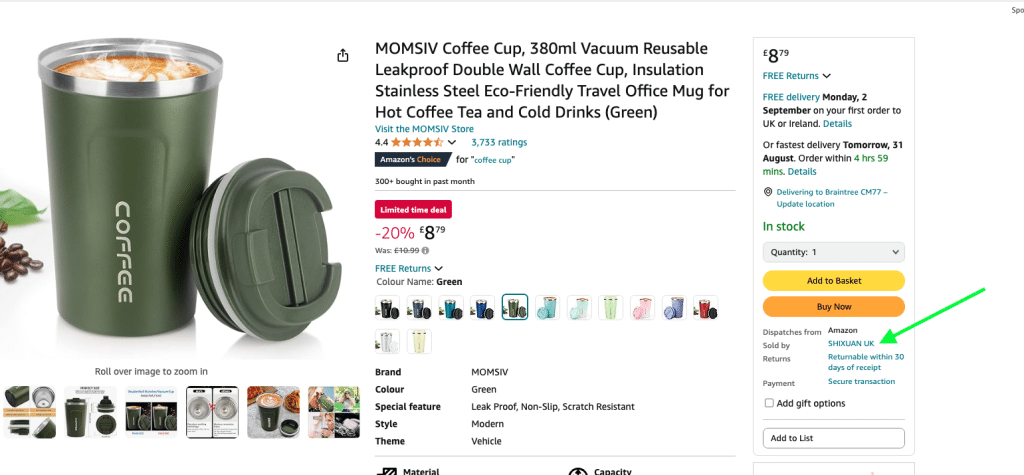
- Higher Chances of Winning the Buy Box: In many cases, there are multiple Amazon Sellers selling the same product. FBA increases the likelihood of your business winning the Buy Box because Amazon prefers sellers who use its fulfilment services. Winning the Buy Box can significantly increase your sales since it’s where the majority of purchases on Amazon are made.
- International Reach: FBA simplifies the process of selling internationally, with Amazon managing cross-border shipping and customs clearance. This makes it easier to expand into new markets without the hassle of dealing with international logistics.
Cons
- Complex Fee Structure: While FBA simplifies logistics, the associated costs can be complex and sometimes unpredictable. Their layered fee structure makes it challenging to forecast expenses accurately, especially for businesses with tight margins.
- Inventory Management Challenges: Managing stock levels can be tricky due to Amazon’s inventory restrictions and frequent policy updates. Sellers must carefully balance the need to keep enough stock on hand to meet demand without exceeding Amazon’s limits or facing long-term storage fees.
- Branding Limitations: You are bound by Amazon’s fulfilment standards, which limits how you present your brand. Custom packaging and branded inserts aren’t typically an option, which makes it harder to differentiate your products and create a memorable customer experience. This is a drawback for brands that rely heavily on distinct packaging to build brand recognition and customer loyalty.
Pros and Cons of Fulfilment By Merchant (FBM)
Pros
- Flexibility in Operations: As you handle your own fulfilment, you can quickly adapt to changes in the market or your business needs without being locked into Amazon’s systems.
- Better Cash Flow Management: Managing your own inventory means you don’t have to send large amounts of stock to Amazon months in advance, especially for busy seasons like Christmas. This helps you keep better control of your money, as you’re not tying it up in stock that’s sitting idle.
- Direct Customer Engagement: FBM lets you connect more directly with your customers. You can personalise the packaging, handle customer service your way, and really build a relationship with your buyers. This personal touch helps your brand stand out and keep customers coming back.
Cons
- More Work: Running your own fulfilment can be a lot to manage, especially if your business is growing fast. If you need support with your logistics, our Amazon FBM services help streamline your operations, ensuring you maintain high standards without getting bogged down in the details.
- Prime Eligibility Challenges: Qualifying for and keeping Seller Fulfilled Prime (SFP) can be tough without a solid fulfilment setup.
- Customer Perception: Products handled through FBM may not seem as reliable to customers compared to those with the Prime badge. Depending on the competition on Amazon for your products, this can mean fewer clicks and sales, so it’s important to keep your service levels and reviews high to build trust.
FBA or FBM – What’s Best For Your Business?
Choosing between FBA and FBM depends on the unique needs of your business. Here are some scenarios where each Amazon fulfilment method is more suitable than the other:
When to use Amazon Fulfilment (FBA)
Scenario 1: High Demand and Fast Turnover
If your products have a strong sales history and quick turnover, FBA will help you maintain momentum by guaranteeing fast, reliable delivery through Prime Shipping.
For example, a business selling tech gadgets or seasonal bestsellers like toys around Christmas would benefit from the Prime badge and Amazon’s fulfilment network to meet high customer demand and attract more sales.
Scenario 2: Scaling Up Without the Hassle
For businesses looking to scale quickly without a fulfilment partner, FBA can handle this increase in volume with ease, allowing you to focus on growing your product line or expanding into new markets.
For example, a beauty brand launching a new product range can rely on FBA to manage the fulfilment load, freeing up time to focus on marketing and product development.
When to use Amazon FBM
Scenario 1: Control Over Branding and Customer Experience
If your brand relies on custom packaging or adding personalised touches to your customer orders, using FBM allows you to maintain complete control. A business selling handcrafted goods or premium products would find FBM ideal as it can create a unique brand experience through signals such as luxury packaging and free samples.
Scenario 2: Cost Efficiency for Large or Heavy Products
FBM is more cost-effective for bulky, heavy or low-profit margin products where FBA fees can significantly cut into the profitability of selling on Amazon. Sellers of items like furniture, gym equipment, or automotive parts can manage their own logistics to avoid the high storage and fulfilment fees associated with FBA.
Combining fulfilment methods
Sometimes, the best approach isn’t choosing between FBA or FBM but rather using both methods to suit different business needs. This hybrid strategy offers the best of both worlds, allowing you to leverage the strengths of each fulfilment option.
You might find that FBA works best for your high-demand, fast-moving products, where the Prime badge drives more sales, while FBM is better suited for bulky items with lower margins or special handling.
As an example, you might use FBA for smaller, popular items to take advantage of Amazon’s fulfilment network and Prime eligibility while managing larger items through FBM to keep costs down and maintain control over shipping.
Another way to use both FBA and FBM is by separating seasonal and non-seasonal inventory. You could use FBA during peak seasons like Christmas or Black Friday for products that need to be moved quickly, benefiting from Amazon’s logistics. FBM could then be used year-round for items with steady, predictable sales, allowing you to manage stock levels according to your own needs.
Simplify Your Amazon Fulfilment
Whether you choose FBA, FBM or a combination of both, the team at Delta Fulfilment are here to provide the support your business needs with tailored solutions. Our FBA prep services take the hassle out of getting your products ready for Amazon’s warehouses, while our FBM fulfilment services streamline your operations and help you maintain control over your customer experience.
Reach out to us today to get a quote and learn how we can help maximise your success on Amazon’s platform.