

Subscription-based models are taking the eCommerce scene by storm, providing businesses with steady revenue and customers with hassle-free shopping. But how do you forecast the revenue from these subscriptions accurately? It can feel like trying to predict the weather – sometimes sunny, sometimes stormy!
The best approach to forecasting subscription revenue lies in understanding your data and your customers. If you’re thinking about scaling your subscription eCommerce business, look at historical trends and keep an eye on important metrics to get a clearer picture of what’s ahead. This isn’t just about numbers; it’s about making smart choices that help your business grow and thrive.
What is subscription revenue forecasting?
Subscription revenue forecasting is predicting the income your business will generate from your type of subscription service over a specific period. Think of it as your financial roadmap, helping you navigate the ups and downs of your subscription model.
At its core, this forecasting process involves analysing historical data, customer behaviour, and market trends to estimate future revenue. Knowing how many subscribers you have, how long they typically stay, and how much they spend can help you create a more accurate picture of what lies ahead.
Why is this important? Well, accurate forecasting helps you make calculated choices about inventory, marketing strategies, and resource allocation. It also gives you a clearer view of your business’s health so you can identify potential challenges before they become major issues.
What key metric do I need for accurate subscription revenue forecasting?
To get a solid grip on subscription revenue forecasting, it’s all about the metrics. These key performance indicators (KPIs) are your best friends, and they’ll help you understand how your business is doing and what’s coming down the pipeline.
1. Monthly Recurring Revenue (MRR)
Think of MRR as your subscription business’s lifeline. It’s the predictable revenue stream you can count on each month from your subscribers, even if you have different billing cycles. Keeping track of MRR helps you spot trends and make adjustments to stay on course for growth

Example: Let’s say you have 100 customers, each paying an average of £50 per month:
MRR = 100 × £50 = £5,000
So, your business is expected to generate £5,000 in predictable monthly revenue. Not too shabby!
2. Churn Rate
Churn rate is a report for customer retention. It tells you what percentage of your subscribers are cancelling their subscriptions during a specific time frame. If this number is high, it might be time to investigate why customers are leaving and how you can improve their experience.

Example: If you started the month with 200 customers and lost 10 by the end:
Churn Rate = (10 ÷ 200) × 100 = 5%
A 5% churn rate means you’re keeping 95% of your customers happy. Keep up the good work!
3. Customer Lifetime Value (CLV)
CLV is all about the long game. It estimates the total revenue you can expect from one customer over their entire relationship with your business. Knowing your CLV helps you figure out how much you can invest in attracting new customers without breaking the bank.

Example: If your average customer pays £60 per month and typically stays for 18 months:
CLV = £60 × 18 = £1,080
Each customer is worth £1,080 to your business over their lifetime. That’s something to celebrate!
4. Average Revenue Per User (ARPU)
ARPU gives you insight into how much revenue each subscriber brings in on average. Annual recurring revenue can help you fine-tune your pricing strategies and identify opportunities for upselling or cross-selling.

Example: If your total monthly revenue is £10,000 and you have 200 users:
ARPU = £10,000 ÷ 200 = £50
On average, each user is contributing £50 to your monthly revenue. Every little helps!
5. Subscriber Growth Rate
Keeping tabs on your subscriber growth rate shows how quickly your customer base is expanding (or not). A healthy growth rate indicates that people love what you’re offering, while any dips may signal areas that need some attention.

Example: If you started the month with 500 subscribers and gained 50 new ones:
Growth Rate = (50 ÷ 500) × 100 = 10%
A 10% growth rate means your subscriber base is expanding nicely. Keep that momentum going!
How to Accurately Forecast Subscription Revenue
Forecasting subscription revenue doesn’t have to be rocket science. Here’s a simple formula to get you started:
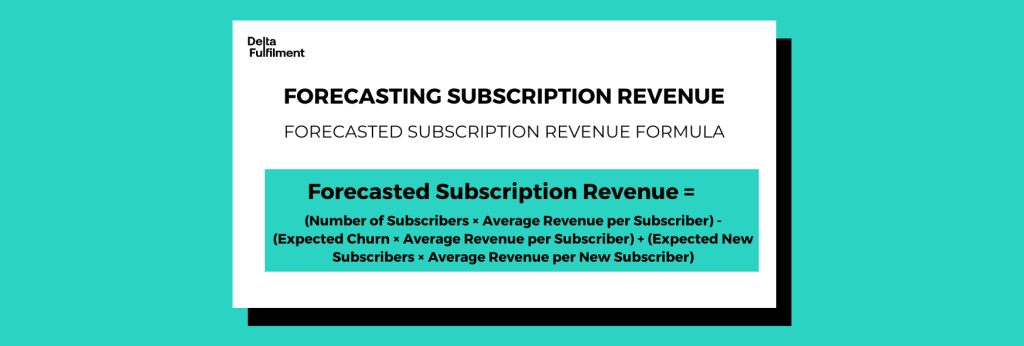
Let’s break this down with an example:
- Current subscribers: 1,000
- Average revenue per subscriber: £50/month
- Expected monthly churn rate: 5% (50 subscribers)
- Expected new subscribers: 8% growth rate = 80/month
- Average revenue per user: £50/month (This may be different if you offer a promotional discount for new subscribers or have a different Customer Acquisition Cost (CAC))
Forecasted Monthly Subscription Revenue = MRR – (50 × £50) + (80 × ARPU)
= £50,000 – £2,500 + £3,600
= £51,100
So, your forecasted subscription revenue for the next month would be £51,100.
What factors should I consider while I’m forecasting subscription revenue?
If you want accurate revenue forecasts for cash flow projections, there are a few key factors to keep in mind that can really make a difference.
1. Market and Economic Trends
Stay in the loop with what’s happening in your industry and the economy. Are new competitors popping up? Is there a shift in what customers want? Keeping an eye on these trends helps you anticipate changes that could impact your revenue. Plus, always being present around economic conditions, like whether people are feeling financially secure or tightening their belts, can give you valuable insights into consumer behaviour.
2. Customer Behaviour and Feedback
Your customers are your best source of information! Pay attention to how they engage with your subscription service. Are they sticking around, or are you seeing a higher churn rate? Regularly collecting feedback through surveys can help you gauge satisfaction levels and spot areas for improvement. Happy customers are more likely to stay and even recommend you to their friends!
3. Seasonality and Marketing Efforts
A lot of businesses experience ups and downs throughout the year, so think about how holidays or special events affect your sales. Also, launching a new seasonal campaign or offering a promotion could attract new subscribers or help retain existing ones.
4. Product Changes
If you’re planning to roll out new features, products, or pricing models, keep in mind how these changes might influence your subscribers’ behaviour. Will they be excited about the new offerings, or could it lead to confusion? Being familiar with how product changes impact your customers is key to predicting future revenue.
Ready to Optimise Revenue for Your Subscription Business?
Accurate forecasting is just the beginning of your subscription journey. To truly maximise your revenue growth and improve customer retention, you need a partner who understands the unique challenges of subscription management. That’s where Delta Fulfilment comes in!
At Delta Fulfilment, we specialise in tailored subscription fulfilment solutions that not only streamline your operations but also help you gather valuable data. Our systems seamlessly integrate with hundreds of marketplaces and platforms, including Shopify, Amazon, eBay, and WooCommerce, so you can collect insights that inform your forecasting and retention strategies.
With our dedicated team managing everything from picking and packing to shipping and returns, you can focus on what really matters – building strong relationships with your customers. We work closely with you to adapt our services to fit your business model perfectly, ensuring a smooth process that keeps your customers happy and engaged.
Let us help you create an exceptional subscription experience that promotes loyalty and keeps customers coming back for more. Reach out today to discover how Delta Fulfilment can support your subscription business with data-driven insights and seamless fulfilment solutions!