

Roughly a third of the world’s products are made in China, so when the country slows down, the ripple hits everyone – especially UK eCommerce brands. And during Chinese New Year, things don’t just slow down… they pretty much stop.
For many brands, this is a recipe for stockouts, unhappy shoppers, and a warehouse team wondering where everything has disappeared to.
The Chinese New Year shutdown might be out of your hands, but the impact doesn’t have to be. With early planning, smart stock decisions, and an eCommerce fulfilment setup that can handle extra inventory before the holiday rush, you can ride out the slowdown while your competitors scramble.
When is the Chinese New Year 2026 shutdown?
Chinese New Year (also known as the Spring Festival or the Lunar New Year) falls on 17th February 2026. It falls on a different date each year because it follows the lunar calendar, so suppliers and factories close based on that shifting schedule rather than a fixed date. However, the disruption kicks in long before the official public holiday and the celebrations begin.
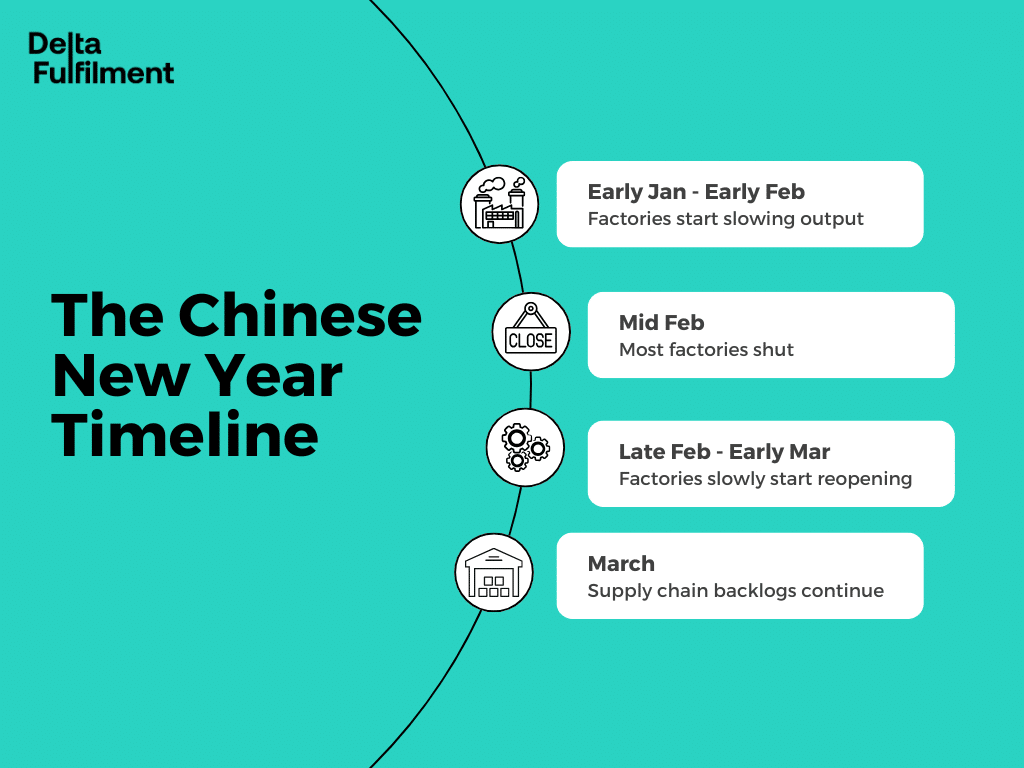
Early January – Early February
From early January, factories across China will begin to slow their output as their workers take extended leave. Lead times stretch, and last-minute orders often get pushed aside.
Mid-February (Around 10-15th February)
Around 17th February, most factories will close completely. Production will stop, emails will go quiet, and carriers will be under pressure to deal with the annual rush of freight trying to escape the country before the doors shut.
Late February – Early March
From late February, the factories will begin reopening at reduced capacity. It takes time for staff to return, equipment to restart, and order backlogs to clear. It’s common for suppliers to take weeks to get back to normal capacity.
March
Once the Chinese New Year holiday is over, the seaports and airports will be at full capacity as everyone tries to ship at once.
For UK eCommerce brands, this means you’re dealing with a 6-10 week period of disruption where production, freight, and restocking all move at a snail’s pace. Planning ahead is the only way to avoid stock shortages and expensive surprises.
How the Lunar New Year Disrupts UK eCommerce Supply Chains
Even if your products aren’t made directly in China, many components, packaging materials, and raw ingredients are, which means delays work their way through every link in your supply chain until they reach your stockroom.
Factories Shut & Production Stops Completely
Once workers head home for the Chinese New Year period, no new stock is made, no samples are produced, and no revisions are completed. Anything unfinished before the break is pushed into March or later.
Staff Shortages = Longer Lead Times
Many workers travel long distances to see family, and it’s common for some to return late or not return at all. Suppliers then reopen with fewer staff, which means they have slower output and longer lead times.
Port Congestion Creates Long Delays
Everyone tries to ship freight at the same time before the shutdown, and then again once factories reopen. Ports become crowded on both ends of the holiday, and vessels fill up fast. This leads to:
- Longer waiting times
- Higher freight rates
- More rolled containers
- Unpredictable departures
Knock-On Delays for UK Warehouse Operations
If shipments land late, your incoming stock schedule becomes unpredictable. This can lead to:
- Empty shelves during peak demand
- Bumpy restocking cycles
- Customer orders are stuck waiting for inventory
- Higher customer service workloads
Higher Costs Across the Board
Freight rates rise during the rush, suppliers increase minimum order quantities, and air freight becomes painfully expensive. If you’re not prepared, your margins take a hit before you’ve even sold anything.
eCommerce Businesses at the Highest Risk of Disruption
Some products feel the pressure of the Chinese New Year shutdown more than others. If your brand relies on goods that need constant replenishment or have short selling cycles, the disruption hits harder and faster.
Beauty & Cosmetics
Beauty and cosmetics products tend to turn over quickly. They also rely on precise manufacturing schedules and use components like pumps, droppers, and bottles sourced from China.
Electronics
If you are selling electronics, even if your final assembly isn’t in China, many internal components are. Chips, cables, charging units, and LEDs are all vulnerable to factory downtime and supply backlogs.
Toys & Games
The toys and games sector is heavily tied to Chinese manufacturing. If you’re selling items like puzzles, plush toys, children’s gifts, or anything that peaks around seasonal moments, a slow start to the year can leave you short.
Homeware
From cookware to décor, many items are bulky, so they rely on sea freight and need long lead times. A delay here can stretch into months, especially if your SKUs are large or heavy.
Fashion & Apparel
Clothing sells fast, and styles change quickly. If your suppliers pause production for several weeks, you could miss important selling windows or end up launching collections far later than planned.
Vitamins, Supplements & Wellness Goods
Bottles, pouches, scoops, labels, and even raw ingredients often come from Chinese suppliers. Any slowdown in this chain can leave you with gaps in your subscription cycles or out-of-stock essentials.
Fast-Moving Consumables
Anything your customers buy on repeat, like pet products, stationery, or craft supplies, needs a consistent stock flow. When the pipeline slows, customers switch to the next brand instantly.
How UK Brands Can Prepare for the Chinese New Year Shutdown 2026
If you get out in front of the lunar new year, you can minimise the impact of the supply chain disruptions.
Talk to Your Suppliers Now
Suppliers receive a rush of orders before the new year period and prioritise brands that plan ahead. Confirm:
- Production timelines
- Cut-off dates
- Lead times and pricing for both sea and air freight
- Staffing levels before and after the break
The earlier you book your slot, the better your chances of getting stock made on time.
Forecast Q1 & Q2 Demand
Look at last year’s sales, current trends, and any marketing campaigns you’ve got lined up to forecast seasonal demand. This will help you work out how much stock you’ll actually need to stay covered through the entire shutdown period and in the weeks after.
Increase Buffer Stock in the UK
If your bestsellers move fast, leaving stock in China during the shutdown is risky. Bringing a larger shipment into the UK before the slowdown keeps you protected. A 3PL like Delta Fulfilment can scale with you to provide the extra space for this period.
Secure Your Freight Bookings
Carriers fill up fast in the weeks leading up to CNY. Booking freight early:
- Locks in better rates
- Reduces the risk of rolled containers
- Keeps your delivery window predictable
If sea freight feels too risky, use air freight for a small percentage of your SKUs.
Plan Alternative Suppliers
It’s worth researching backup manufacturers or packaging suppliers in China to give you more breathing room when the lead times stretch. Even if you don’t need them this year, you’ll be glad you set up the relationship.
Review Cash Flow
Ordering stock earlier means tying up cash sooner. Build this into your budgeting now instead of scrambling later.
Pull Back on Risky Marketing
If you aren’t sure when a shipment will land, don’t run big campaigns pushing products that could sell out midway. It’s better to scale the activity up once the stock is safely in your warehouse.
Get your Fulfilment Setup Ready
Make sure you’ve got:
- Clear inbound booking plans
- Space to hold extra stock
- Reliable pick-pack capacity
- Flexible courier options
This is where a good fulfilment partner keeps everything steady, even when overseas supply isn’t.

Looking Beyond CNY? See the Full List of 2026 eCommerce Dates
If you’re planning ahead for the Chinese New Year shutdown, you might find it useful to map out the rest of your year, too.
Inventory Planning: How Much Extra Stock You Actually Need
Calculate Your Minimum Coverage

Knowing you need “more stock” is one thing, but working out how much is another. A simple way to stay safe is:
(Average weekly sales × extended lead time) + safety buffer
For example:
If you sell 300 units a week and the extended lead time is 12 weeks:
300 × 12 = 3,600 units
Then add a buffer of 20-30%, or more if you’re in a fast-moving category.
Your minimum incoming stock becomes roughly 4,300-4,700 units.
Check for Upcoming Peaks
If you’ve got promotions, influencer activity or new product launches planned between January and April, build that uplift into your numbers. Chinese New Year hits right when many brands see a natural rise in sales.
Prioritise Your Fastest Movers
Not all products need the same level of protection. Focus on:
- Bestsellers
- Subscription products
- High repeat-purchase items
- SKUs with long restock times
- Anything with a narrow profit margin (expensive air freight isn’t your friend)
These should have a higher buffer stock than slow movers or niche variants.
Managing Customer Expectations During the CNY Delays
If the CNY period causes wobbles to your stock flow, keeping customers up to speed will stop a minor delay from turning into a negative review or refund request.
Be Upfront with Delivery Timelines
If you know certain products might take longer to restock, make it clear on product pages. A simple note like “Restocking soon” or “Ships from X date” sets the right expectations without scaring customers off.
Update Product Availability in Real Time
Your inventory should sync automatically with your website so items don’t stay live after selling out. Customer satisfaction will plummet if shoppers believe there’s stock available when in fact there isn’t.
Offer Suitable Alternatives
If a bestseller is tight on stock, highlight similar items or variants. This keeps customers buying and stops your sales from flatlining while you wait for inbound stock.
Communicate Proactively
Dropping your customers an email and SMS update goes a long way. Honesty builds trust, and trust keeps customers coming back even when things run late.
Work With Delta Fulfilment Before the Chinese Holiday Rush Hits
Chinese New Year disruption is far easier to handle when your stock is already here in the UK, and your fulfilment setup can take the pressure. At Delta Fulfilment, we’ve supported eCommerce brands through many supplier shutdowns, and we know exactly what’s needed to keep orders flowing while your suppliers take their annual break.
Our pick and pack runs at 99.85% accuracy, and we’ve got the space to hold the extra stock you bring in before global supply chains start slowing down. You’ll be able to track everything in real time through our portal, and you’ll have flexible courier options so you’re never tied to one carrier during busy periods. We keep things steady behind the scenes, so even if overseas supply is a bit chaotic, your customers still get the level of service they’re expecting.
If you want to hit Q1 and Q2 without worrying about restocks, delays or freight surprises, we’re here to help you map out your plan and get your stock landed early. Get a quote today, and we’ll get you set up before the rush kicks off.