

AI in eCommerce isn’t a future trend. It’s influencing product discovery, reshaping the customer journey and raising the bar for eCommerce fulfilment. Around 39% of consumers and over half of Gen Z already use AI to find new products, and that figure is only likely to grow as the technology becomes more familiar.
For eCommerce retailers, that shifts the goalposts. When AI starts shaping which product pages are surfaced and which recommendations shoppers see first, visibility isn’t as straightforward as it used to be.
Traditional Customer Journey vs the AI Customer Journey
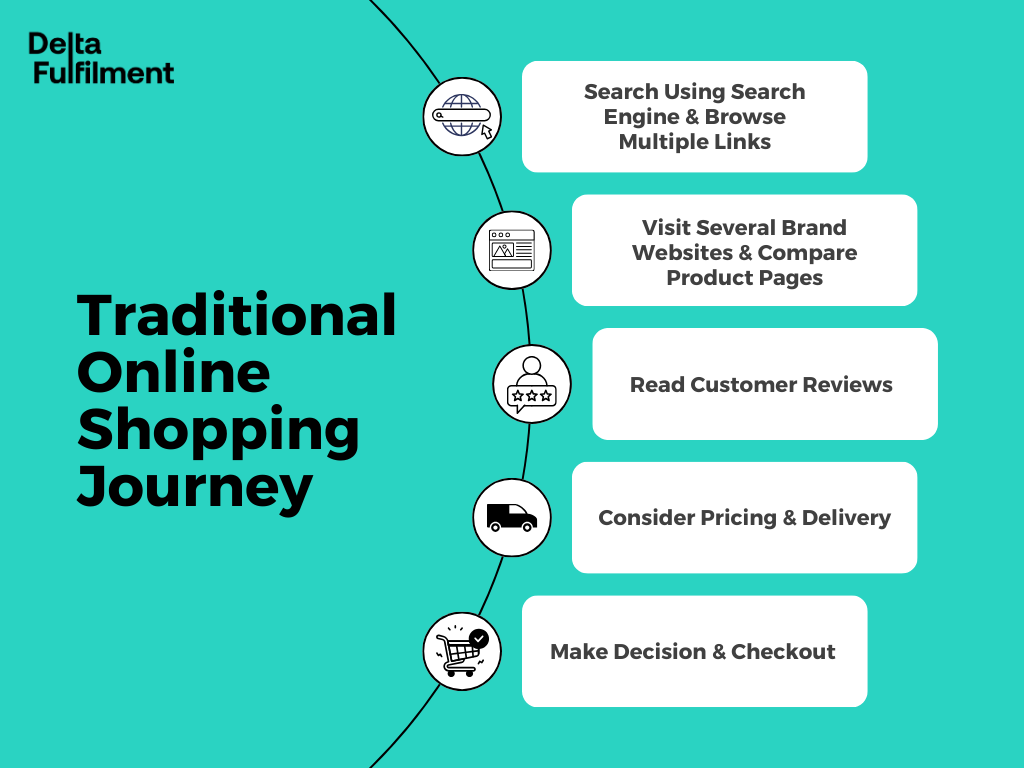
For years, online shopping started the same way. A shopper typed a query into Google, skimmed a few brand websites, compared product imagery, checked customer reviews and made a decision. It took time and effort, but it worked.
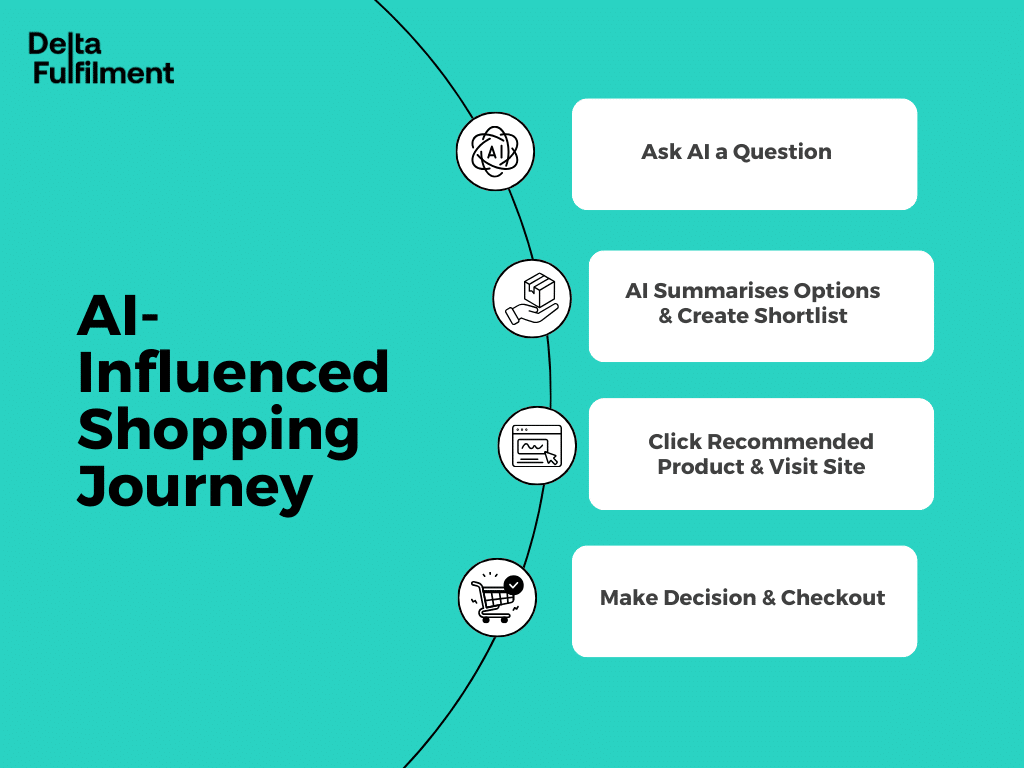
Now, AI is transforming that first step. Instead of scrolling through links, consumers use tools like ChatGPT or Google’s AI-generated summaries to get a direct answer. They’re asking for the “best running shoes under £100” or “top-rated supplements for energy” and getting a shortlist in seconds. Generative AI responds in natural language, summarising information instead of sending shoppers off to browse.
This new way of discovering products shifts the effort involved. Rather than weighing up every option themselves, shoppers rely on AI to filter, compare and rank products on their behalf. Many people hand over the elements of critical thinking to the AI and trust it to make the right choice for them.
AI as a Personal Shopper: How AI Is Shaping Shopper Decisions
AI Assistants Are Replacing the Sales Floor
AI shopping assistants are now built directly into eCommerce platforms, marketplaces and brand websites. Amazon’s Rufus, Shopify’s AI features, and on-site chatbots are designed to act like digital sales assistants. They can answer questions, suggest alternatives and guide the shopping journey in real time. Instead of browsing endlessly, shoppers can ask, “Which one is better for sensitive skin?” and get a straight answer.
AI Personalises the Shopping Experience
Behind the scenes, AI technology uses machine learning, behavioural data and predictive analytics to analyse browsing habits, past purchases and customer data. The result is bespoke product suggestions designed to personalise the shopping experience and reduce friction at checkout.
Customers are increasingly looking for this red-carpet treatment, with 73% saying they expect better personalisation as technology advances. Retailers are using AI to shape what each shopper sees, from homepage layouts to cross-sell and upsell prompts on product pages and even the checkout page.
AI Is Reshaping Competitive Visibility
The use of AI extends beyond shortening the customer journey. It’s quietly reshaping how the competition works.
Behavioural research has long shown that people tend to stick with the option presented as the recommended or default. This is known as the default choice effect, and it explains why shoppers don’t feel the need to dig deeper once AI has made its suggestion.
For eCommerce retailers, this means competing to be included on an AI-generated shortlist. These systems look at structured data, ratings, customer reviews, stock levels and behavioural data to decide what to surface. This means what pops up isn’t random, but based on lots of data.
AI & returns: smarter matching or faster regret?
The Promise: Fewer Returns
If AI can analyse customer data, past purchases and behavioural data to make better product recommendations, logic says customers should get it right the first time. In fashion, that’s a big deal, as incorrect size or fit is the leading reason for clothing returns.
That’s why retailers are investing in AI-powered sizing tools and predictive models. If machine learning can forecast which size is most likely to fit based on similar shopper profiles, returns should drop. Fewer mismatched purchases mean lower reverse logistics costs and better customer satisfaction.
The Reality: Faster Decisions
Whilst AI boosts conversion, it can also increase impulse purchases. If expectations are shaped by an AI summary rather than careful evaluation of product pages, there’s a higher risk of disappointment when the product arrives. Even small gaps between what was imagined and what turns up at the door can trigger a return.
How AI is Transforming Customer Experience Expectations
Customers Don’t Want to Be Tricked
Customers don’t like thinking they’re speaking to a human when they’re not. AI technology can improve the customer experience, but the human touch still matters. Clear labelling, smooth handovers to real support teams and honest communication are now part of good AI practice.
Fast Decisions Mean Fast Delivery
If a shopper can ask a question and place an order in two minutes, they’ll expect the rest of the process to move just as smoothly. But if fulfilment, updates or customer support lag behind, customer satisfaction will drop.
How to Keep Your Products Visible in an AI-Driven Market
Clean, Structured Product Data
AI reads structured data first. Clear titles, consistent specs and properly formatted attributes make it easier for algorithms to accurately categorise and compare your products. If your data is messy, you’re harder to recommend.
Strong, Credible Reviews
AI doesn’t scroll like a human. It scans patterns. If your customer reviews are consistent, detailed and positive, that sends a clear signal that your products are worthy of being surfaced. Make sure you’re putting time into collecting positive reviews and replying to show brand engagement.
Clear, Accurate Listings
If your product images are poor quality or your descriptions are generic, it will impact your returns and reviews. Shoppers want accurate specs, realistic delivery timelines and descriptions that tell them exactly what they’re getting. When the information is clear and honest, better conversion rates tend to follow.
What AI in eCommerce means for Fulfilment & Logistics
Keep on Top of Forecasting
If your product regularly goes out of stock or delivery times slip, it can work against you. Platforms tend to favour listings that are consistent and dependable because that protects the customer experience.
That’s why forecasting customer demand matters more than ever. AI-driven visibility can trigger sudden spikes, and if you can’t anticipate that lift, stock gaps can appear at exactly the wrong moment. When availability drops, so can your exposure.
Be Prepared to Scale
Compressed buying behaviour means orders don’t always arrive in a steady stream. They can land in clusters. If your fulfilment operation isn’t built to flex, things like slower dispatch times, missed cut-offs or picking errors can easily happen.
A scalable fulfilment setup gives you room to handle steady growth and sudden spikes without compromising reliability. In an AI-driven market, operational consistency protects your visibility as well keeping your customers happy.
Stay Competitive in an AI-Driven Retailer Market with Delta Fulfilment
At Delta Fulfilment, we support growing eCommerce brands that want their operations to strengthen their visibility, not limit it. With real-time inventory tracking, high pick and pack accuracy and flexible global shipping options, we help brands stay dependable when algorithms are watching, and customer expectations are rising.
AI may be transforming the front end of eCommerce, but we make sure the back end keeps pace.
Get a quote today and see how Delta Fulfilment can help you stay visible, reliable and competitive as AI continues to reshape eCommerce.