
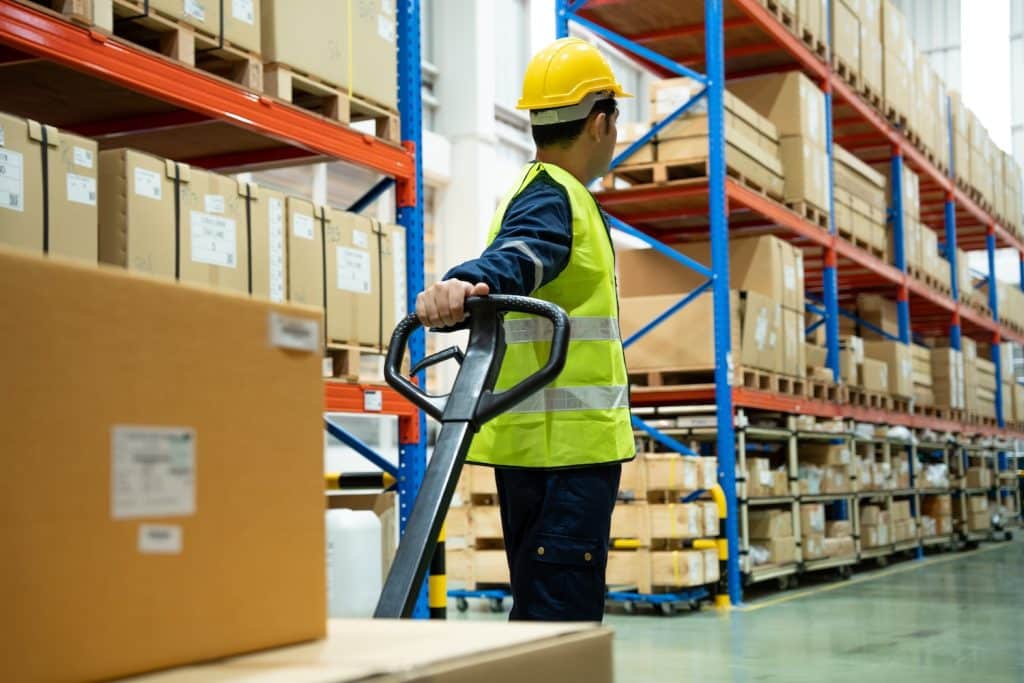
Zone picking is a warehouse method where the storage space is split into separate areas, and each team member works only within their assigned section. When an eCommerce order comes in, every zone picks the items stored in that area, and the goods are brought together before packing.
It’s a simple way to keep large warehouses running smoothly, especially when you’ve got a wide range of products.
How Zone Picking Works
When an order is created in the system, it’s broken down by the zones where each item lives. Each picker handles the products in their own area, scans them, and passes them to a central point where everything is brought together. Once all zones have done their bit, the order is ready for packing and dispatch.
Why eCommerce Brands Use Zone Picking
Zone picking helps brands keep orders moving quickly, especially when there’s a big mix of products on the shelves. Because each picker stays in one area, there’s less chance of traffic jams in the aisles and far fewer delays during busy periods.
It also supports accuracy. When a picker becomes familiar with their own section, they get quicker at spotting products, identifying variations, and catching anything that looks out of place. For growing eCommerce brands with expanding catalogues, this steady, organised flow makes a noticeable difference to fulfilment speed and consistency.
Benefits of Zone Picking for Warehouse Teams
Zone picking keeps things simple for warehouse staff. Instead of learning every shelf in the building, each picker focuses on one section, which makes training quicker and day-to-day work smoother. It also cuts down on walking, which is good news for anyone who’s already hit their step count before 10am.
Because each zone is managed by the same people each day, the space stays tidier and easier to navigate. Stock discrepancies are spotted faster, replenishment is more controlled, and pickers build a natural familiarity with the products in their area. All of this helps orders move through the warehouse at a steady pace.
Challenges of Zone Picking
Zone picking runs best when it’s supported by a solid system that keeps everything in sync. If orders contain items from lots of different zones, the consolidation point can get busy, and this may slow things down during peak moments.
It also relies on good coordination. Each zone needs to pick at a similar pace so orders don’t pile up or hold each other back. Without a reliable Warehouse Management System, it can be tricky to track where items are and which orders are ready to be packed. That said, with the right setup, these bumps are easy to smooth out.
Zone Picking vs Other Picking Methods
Zone picking sits alongside a few other common picking styles used in eCommerce warehouses:
Batch picking
Pickers collect items for several orders at once, usually when there are lots of repeat products. It cuts down travel time but requires careful sorting later.
Wave picking
Orders are grouped and released in timed “waves”, often based on courier cut-offs or product types. This helps keep dispatch schedules tight.
Single-order picking
A picker completes one order from start to finish. It’s straightforward but can be slower in larger warehouses.
Zone picking focuses on keeping pickers in set areas, making it handy for fast-moving catalogues and busy operations. It’s not better or worse than the others — it’s simply one tool in the warehouse toolkit.
When Zone Picking Makes Sense for a Growing eCommerce Brand
Zone picking is a strong fit for brands with a growing SKU range or products spread across different categories. It works particularly well for industries like beauty, fashion, homeware, toys, and supplements – anything where items vary in size, shape, and storage needs.
If you’re scaling up and starting to feel the strain of higher order volumes, zone picking keeps things organised without slowing the flow of goods. It also pairs nicely with a 3PL setup, where the warehouse team already has the space, systems, and staff structure to run this method smoothly. Brands get the benefits without needing to learn the warehouse jargon themselves.