
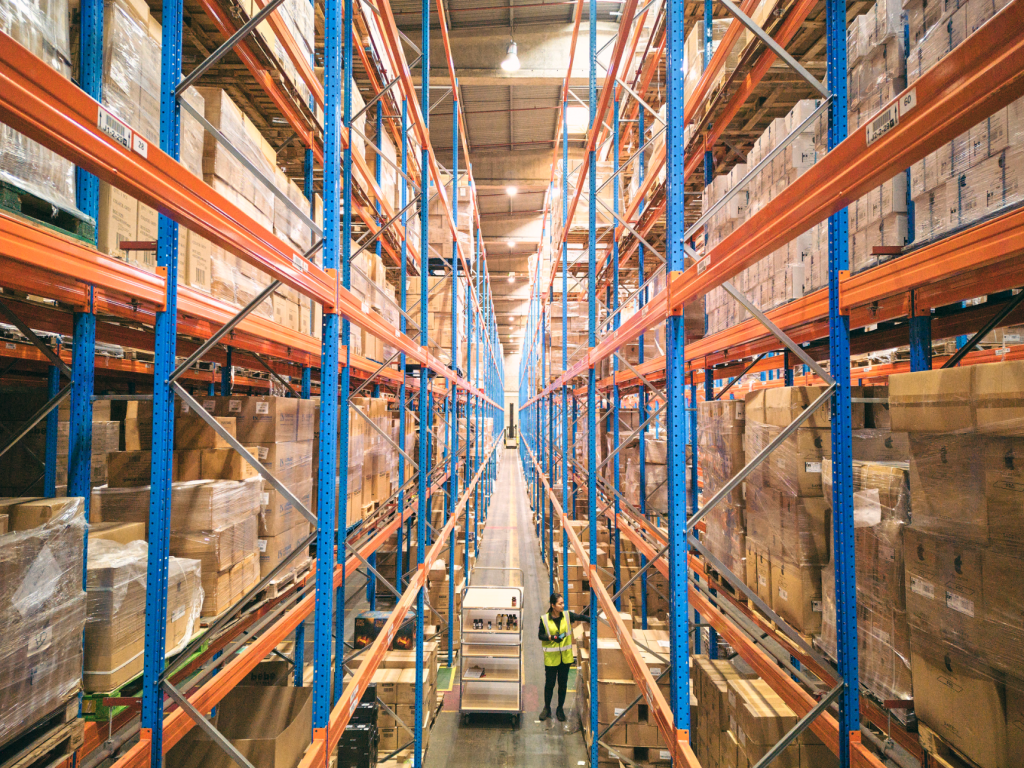
Warehousing refers to the process of storing goods and materials in a large building or space, known as a warehouse, before they are sold, distributed, or shipped to their next destination. It is a key component of the supply chain and logistics operations, ensuring that products are kept safely and efficiently until they are needed.
Types of Warehouses
Public Warehouses
Operated by third parties, these facilities offer storage services to businesses on a short or long-term basis, with costs typically based on the space used and the duration of storage.
Private Warehouses
Owned and operated by the companies that own the goods being stored, these are used for long-term storage of products and provide greater control over inventory.
Bonded Warehouses
Government-licensed facilities that allow for the storage of imported goods without paying duties or taxes until the goods are moved out for distribution.
Distribution Centers
Focused on moving goods rather than storing them, these facilities are designed for rapid output and are often used for cross-docking, order fulfilment, and packaging.
Benefits of Effective Warehousing
- Inventory Management: Warehouses use sophisticated systems to track and manage inventory levels, reducing the risk of stockouts or overstocking.
- Customer Service: By enabling faster order processing and delivery, effective warehousing contributes to higher customer satisfaction.
- Cost: Optimising storage space and reducing handling costs lead to significant savings for businesses.
- Risk Management: Warehouses provide a secure environment for goods, reducing the risk of theft, damage, or loss.