

Shipping looks easy on paper. But as orders grow and eCommerce fulfilment ramps up, delivery costs can really snowball and have a real impact on your margins.
What makes up the shipping cost for an online business?
Shipping costs for an online business are made up of lots of working parts. Getting your head around how these pieces fit together gives you more control and improves your bottom line.
Courier Charges
This is the obvious one. Courier pricing usually depends on the parcel’s weight, size, delivery speed and destination. A UK next-day service will cost more than an economy option, and prices change again once you ship internationally. Each courier has its own pricing structure and niche, so it’s worth comparing Evri vs DPD or Royal Mail vs DHL, etc.
Base shipping rates can also shift as volumes grow, which is why shipping costs often look very different six or twelve months down the line.
Parcel Size & Weight
Couriers don’t always charge based on the weight of your parcel. They can also calculate shipping costs using volumetric and value-based pricing.
For example, if you are selling toys and games, the box might be large but light. This catches a lot of small businesses out, as although the weight is low, the dimensions are big, so the dimensional weight is high.
Packaging Materials
Packaging materials might cost pennies each, but they add up fast across hundreds of orders. Using packaging that’s too big can also push parcels into higher price brackets, which means you’re paying more to ship fresh air.
Labour & Packing Time
Every order takes time to pick, pack, and book in. Even if you’re doing this yourself, that time still has a cost attached to it.
Delivery Speed & Service Level
Standard delivery keeps costs down, while next-day, express shipping and weekend services all come at a premium. The aim is to match customer expectations without putting unnecessary pressure on your margins.
Returns & Failed Deliveries
Returns don’t always get included in shipping calculations, but they should. Collection fees, reprocessing stock, and resending orders all affect your average shipping cost per order, even if only a small percentage come back.
How to Calculate Online Business Shipping Costs: Step by Step
Once you break shipping down, calculating the total cost becomes far less painful and you’ll have a repeatable way to understand what one order actually costs you to send.
Step 1: Base Courier Rate
Start with the courier’s shipping fee to move the parcel from A to B.
This will usually be based on:
- Parcel size and weight
- Delivery speed (standard or next day)
- UK destination or shipping zone
Step 2: Add Packaging Costs
Next, factor in the packaging used for each order. Keep in mind that using branded or sustainable packing solutions for certain items may result in higher costs for that SKU.
Typical packaging costs might include:
- Box or mailer
- Void fill
- Tape
- Shipping label
Step 3: Add Labour Cost
As volumes grow, packing becomes a real operational cost rather than something squeezed in between other tasks. Labour should be calculated as an average handling cost per order, based on typical packing time rather than best-case scenarios.
Step 4: Add Platform or Software Fees (if applicable)
Some shipping costs sit outside physical handling. These might include shipping label software, order management systems, or fulfilment platforms that charge on a per-order basis.
Worked Example: Calculating UK Shipping Cost Per Order
To see this in practice, let’s look at typical shipping costs for an online business in the UK.
Scenario
- One customer’s order is shipping within the UK
- Standard-sized parcel
- Next-day delivery service
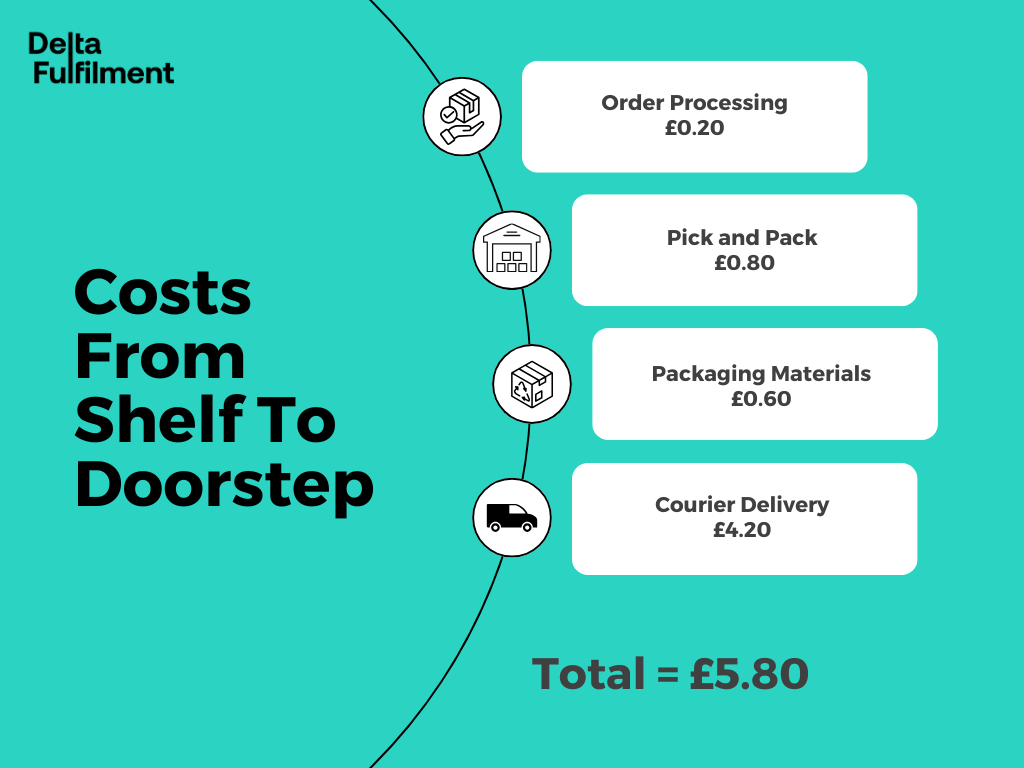
Total Shipping Cost Per Order
The total costs for your eCommerce business per order:
- £0.20 (software)
- £0.80 (labour)
- £0.60 (packaging)
- £4.20 (courier)
The total shipping cost for this order comes to £5.80.
Seeing shipping as a journey rather than a single fee makes it easier to understand where costs build up and where improvements can be made.
International Shipping Costs for an Online Business
Global fulfilment costs follow the same basic logic as UK delivery, but there are a few additional things to factor in.
Carrier Pricing by Destination
International shipping carrier rates are usually set by destination zones rather than distance alone. Shipping to Europe may feel close, but costs rise quickly compared to UK delivery, especially for faster services.
Customs Charges & Taxes
Depending on where the parcel is going and what you’re sending, international orders may have import VAT, duties, or handling fees. Even when the customer pays for these, refused or failed deliveries can still come back at your cost.
Longer Delivery Times
International deliveries take longer, which increases the chance of delays, customer queries, or missed deliveries. More time in transit often means more admin, and that time still has a cost attached to it.
Packaging Becomes More Important
Box size and packing method matter even more for international shipping. Oversized packaging can push parcels into higher pricing bands very quickly, turning an already expensive delivery into a painful one.
Access Better Courier Rates as You Scale
As your order volumes grow, shipping costs don’t have to climb at the same rate. With Delta Fulfilment, you get access to discounted global courier rates and flexible delivery options, helping keep eCommerce fulfilment costs under control as you scale.
eCommerce Shipping Costs & Customer Pricing
How you present your shipping rates on your online store will have a direct impact on conversion and your margins. It’s really important for your bottom line that the numbers behind your shipping strategy actually stack up.
Free Shipping vs Paid Shipping
Free shipping is popular, but it’s never actually free. The actual shipping cost still exists; it’s just absorbed elsewhere (usually in product pricing or margins). This can work well if your average order value supports it, but it needs to be based on real shipping costs, not estimates.
Paid shipping keeps things transparent and protects margins, but only if the price accurately reflects the actual delivery cost. Undercharging here is one of the most common ways shipping quietly eats into profit.
Shipping Thresholds
Setting free shipping thresholds is a safer middle ground between free shipping and paid shipping. They encourage larger baskets while giving you room to cover delivery costs.
A simple way to approach this is to look at:
- Your average shipping cost per order
- Your average margin per product
From there, you can set a threshold that increases order value enough to comfortably absorb shipping, without wiping out profit.
Flat-Rate Shipping
Using flat-rate shipping keeps checkout simple. With this approach, there’s one clear delivery price, which if priced right, can lead to fewer abandoned carts caused by last-minute shipping shock.
It works best when your products fall within a fairly narrow size and weight range. In that case, a well-calculated flat rate can cover most orders without overcharging smaller ones or underpricing larger parcels.
The risk is setting the rate too low based on best-case shipments. If heavier or bulkier orders are common, flat rates need to be reviewed regularly to avoid quietly eating into margins.
Customer Expectations vs Reality
Customers are used to fast, low-cost delivery, but that doesn’t mean every order needs a premium service. Offering a mix of options, like standard delivery alongside next day, gives customers a choice while keeping costs under control.
Mistakes That Can Affect Shipping Costs
Most shipping problems don’t come from one big mistake. They come from a few small ones repeated across every order.
Relying on Old Assumptions
Shipping costs change as your business changes. Order profiles shift, average parcel sizes creep up, and courier pricing evolves. Sticking with assumptions made earlier on often means today’s shipping costs aren’t fully reflected in pricing.
Treating All Orders the Same
Not every order should be shipped in the same way. Applying one delivery method across all products or destinations usually leads to unnecessary cost on some shipments and service issues on others.
Letting Exceptions Skew the Average
Heavy, bulky, or awkward orders can quietly drag your average shipping cost up if they’re not accounted for properly. These outliers need to be factored in, not absorbed and forgotten.
Reviewing Costs Too Infrequently
Shipping isn’t a set-and-forget part of the business. Even small changes in courier rates, packaging prices, or returns behaviour are worth checking in on before they become expensive habits.
Make the Cost of Shipping Easier to Manage
As order volumes grow, shipping gets harder to manage because there are more moving parts to keep track of. Costs change, order profiles shift, and what worked a few months ago doesn’t always hold up.
When you know your true shipping cost per order, it’s easier to spot where money is being wasted and adjust your pricing with confidence. Regular reviews and flexible delivery options help keep those costs predictable.
For many growing online businesses, this is where working with a fulfilment partner makes sense. Bringing packaging, labour, systems, and courier rates together under one roof simplifies shipping and makes costs far easier to manage as volumes increase.
If you want help taking the uncertainty out of shipping and keeping your margins intact as you scale, the team at Delta Fulfilment can help. Get a quote today and we’ll get the ball rolling.
99.85%
Pick and Pack Accuracy
3 Million
orders processed per year
200k ft
of warehouse space
99.92%
of orders shipped within SLA