7 Common Mistakes in Customer Demand Planning
Many growing businesses trip over the same hurdles, from overlooking external influences to using only historical data in their forecasting process. But these mistakes are easy to avoid once you know what to watch out for.
1. Relying on Gut Feelings Instead of Insights
It’s tempting to make stock decisions based on your instincts, especially if you’ve been running your business for a while and you feel like you “know” your customers. The trouble is, hunches don’t always match real buying patterns. What feels right in the moment can quickly lead to excess stock of slow sellers or empty shelves when demand surges for your bestsellers.
A more reliable approach is to use demand forecasting models built on real-time sales data, historical data, and customer feedback. These inputs reveal buying patterns and highlight changes in customer behaviour that you might not spot otherwise. The more you refine your demand forecasting processes with accurate demand forecasting, the more confident you can be in predicting future demand.
That’s not to say experience doesn’t count. But backing up your valuable insights with evidence from data-driven forecasting tools puts you in a far stronger position to meet customer demand without wasting cash or warehouse space.
2. Ignoring External Factors
Looking only at your past sales is like driving by staring in the rear-view mirror. Historical data gives you part of the picture, but it won’t warn you about the sharp bends ahead. Your forecasting can be thrown off by changes in economic conditions, seasonal shifts, social media trends, market trends, and even the weather.
Take stationery and craft supplies as an example. A viral trend like bullet journaling can spark a sudden spike in demand for notebooks and pens. Or think about hay fever remedies – a warmer-than-usual spring can bring an early pollen surge, pushing up sales weeks ahead of schedule. If you don’t factor in these external signals, your forecasts may lag behind reality.
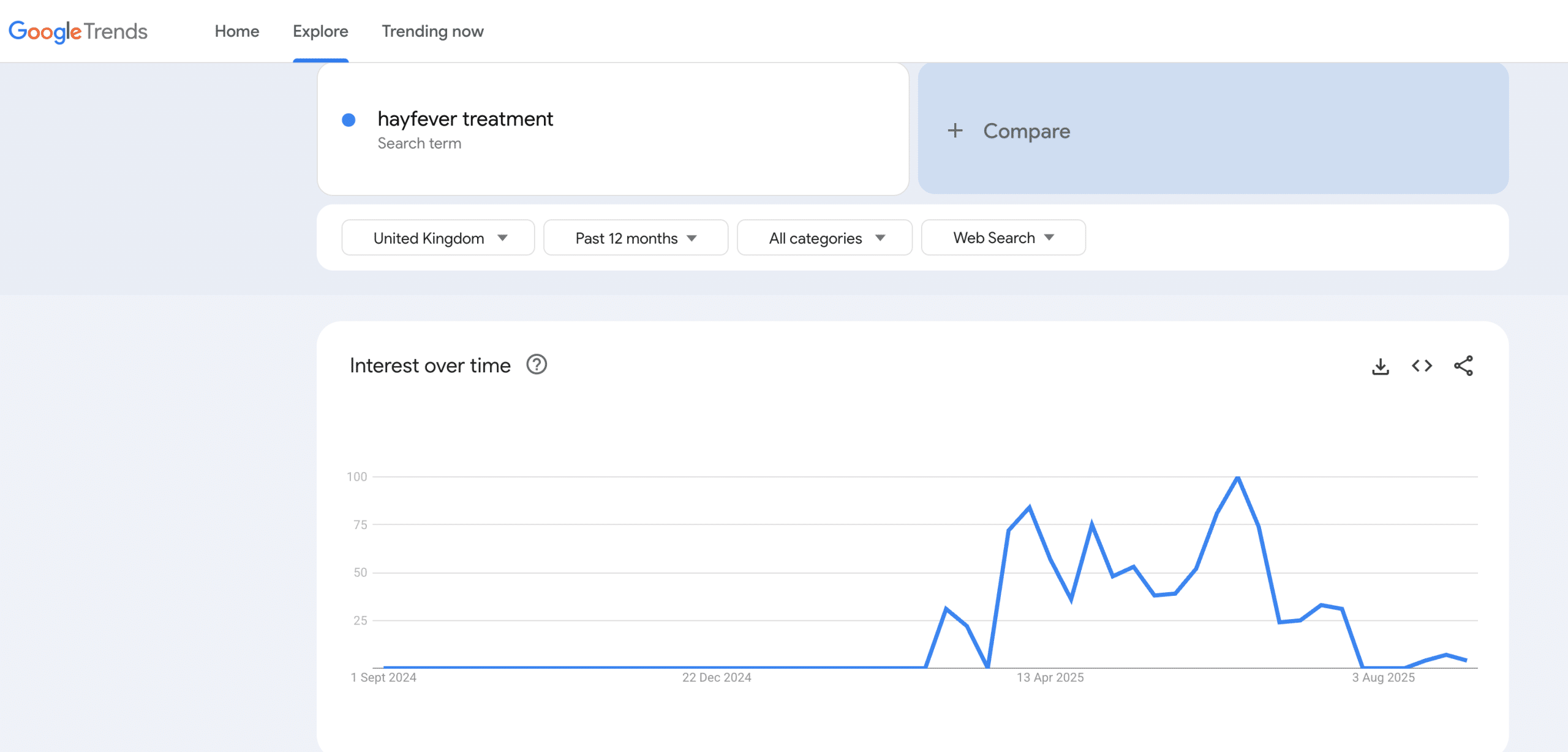
- Search trends for hayfever treatments in Google Trends
The way around this is to look at internal real-time data alongside wider market insights. That could mean monitoring industry reports, tracking social media trends, or even recording contextual data like weather patterns alongside your sales figures. By keeping one eye on the world outside your warehouse, you’ll be ready to respond when customer behaviour shifts.
3. Forgetting to Review Forecast Accuracy
Forecasting isn’t a one-and-done job. Too many businesses create a demand forecast, file it away, and never check if reality matches their predictions. Without reviewing accuracy, you’ll keep repeating the same mistakes, like running out of seasonal bestsellers at the worst possible time.
Often, inaccurate forecasts aren’t only down to bad luck; they’re based on poor or incomplete data. Outdated spreadsheets, disconnected sales channels, or missing context (like seasonality) all weaken the quality of your predictions. If the inputs are off, the outputs will be too.
To improve your accuracy, regularly compare your forecasts with actual sales data and then dig into why they didn’t line up. Were you missing data from an important sales channel? Did an unexpected external factor throw things off?
Treat every forecast as a chance to learn and tweak your approach. By building checks into your process and cleaning up your data sources, your future predictions will get sharper every time.
4. Treating Every Product the Same
Not all products have the same trends, but many businesses forecast them as if they do. This “one-size-fits-all” approach can leave you overstocked on slow movers and underprepared for your fast sellers. The reality is that each SKU has its own demand patterns, with some ticking along steadily, others peaking at certain times of year, and a few being unpredictable wildcard items.
For example, a particular version of a toy might suddenly surge in popularity after going viral on social media. Or a certain type of homeware could take off overnight thanks to a celebrity mention. If you treat them with the same forecast model, you’ll either waste money storing excess stock or miss out on sales when demand spikes.
To avoid this, break your forecasts down into smaller groups, such as by product category, customer type, or sales channel. This gives you a clearer picture of which products need closer monitoring, which are steady sellers, and which could surprise you. Segmenting in this way helps you stay responsive and match stock levels to actual demand behaviour.
5. Not Planning for Peaks, Disruptions or Lead Times
Customer demand rises and falls throughout the year, and sometimes spikes out of nowhere. Many businesses stumble because they don’t build these fluctuations into their forecasts.
This quickly leads to stockouts that frustrate loyal buyers, excess overtime to keep up with late orders, or expensive rush orders from suppliers that chip into your profits or cause price hikes over time. All of these outcomes affect long-term demand planning and make it harder to enhance customer satisfaction.
Black Friday, Christmas, or back-to-school periods are predictable, yet some SMEs get it wrong every year because they haven’t used seasonal demand forecasting. Add in changing market conditions like supplier delays, or sudden market changes driven by social media hype, and you can see how fragile an untested forecast really is. These issues can significantly impact your supply chain operations and weaken your overall inventory management.
The way around this is to create a thorough forecasting strategy that includes scenario planning. Map out the best, worst, and most likely outcomes so you’re prepared for sudden swings in demand. Factor in supplier lead times, and build in some buffer stock for your best sellers to protect against missed opportunities when demand spikes.
By improving your inventory planning and considering the wider market dynamics, you’ll improve forecast accuracy, reduce excess inventory, and stay in control when disruptions hit.