
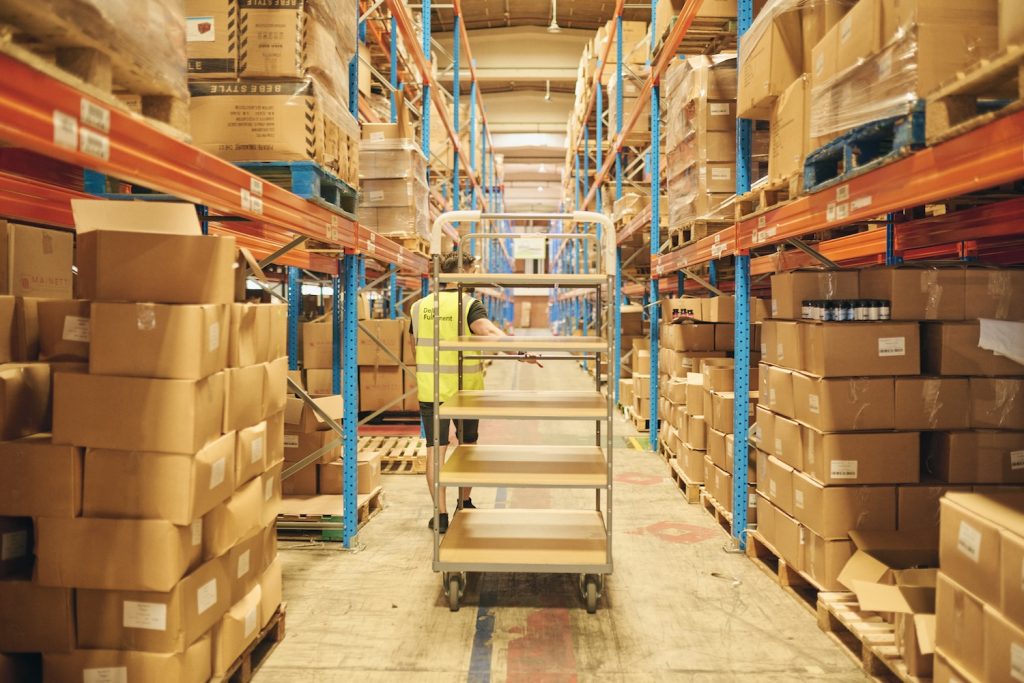
Cluster picking is a warehouse picking method where one picker collects items for several orders at the same time. Each order is kept separate using its own bin, tote, basket, or section on a trolley, so nothing gets muddled.
How Cluster Picking Works
With cluster picking, orders are grouped into a batch known as a “cluster”. Each order gets its own bin or tote on the picker’s trolley or workstation, so everything stays neatly separated. Once the cluster is set, the picker follows a single route through the warehouse, collecting the items needed for each order as they go.
Every time they reach a product location, they pick the required quantity and place each item into the right bin. The warehouse system guides the picker through the route, tells them what to grab, and reduces the chances of mixing anything up.
By the time the picker returns to the packing area, all orders in the cluster are complete, separated, and ready for packing. It’s a tidy process that cuts walking time, boosts speed, and keeps accuracy high – saving everyone’s legs and a fair few headaches.
When eCommerce Brands Use Cluster Picking
Cluster picking comes into its own when businesses deal with lots of small, easy-to-handle products and steady order volumes. It’s a good fit for brands where customers regularly buy a mix of items, or where many orders share similar SKUs. That might include beauty and skincare, vitamins and supplements, fashion accessories, toys, stationery, or homeware brands — the sort of products that don’t weigh a ton but keep warehouse teams busy.
It’s also helpful for subscription models, where monthly or weekly orders often repeat the same items. Instead of picking each order one by one, grouping them into clusters keeps everything organised and moving at a steady pace.
Cluster picking isn’t usually used for oversized, awkward, or heavy goods, as these are harder to sort across multiple bins. It also offers less advantage for single-item orders, because there isn’t much walking saved when every order needs the same quick stop. But for businesses sending out a high volume of smaller orders, it can make fulfilment feel a lot smoother.
Benefits of Cluster Picking
Cluster picking gives growing eCommerce brands a smoother, faster way to move orders through the warehouse. Some of the main perks include:
- Less walking, quicker picking
The picker follows one route instead of repeating the same loop multiple times, which speeds things up and conserves a bit of shoe leather. - Higher accuracy
With each order kept in its own bin or tote, items stay organised and mistakes drop dramatically. It keeps those “I swear I didn’t order this…” customer messages to a minimum. - More predictable workflows
Clusters create a clear rhythm for the team, making it easier to manage steady order volumes without disruption. - Better use of labour
Pickers spend more time actually picking, rather than trekking back and forth. That means more orders completed in the same amount of time. - Supports busy periods
When orders spike, this style of picking helps keep things running smoothly without the warehouse feeling like a supermarket on Christmas Eve.
Common Challenges with Cluster Picking
Cluster picking works well, but it still needs structure behind the scenes. A few things can trip businesses up if the process isn’t set up properly:
- Keeping the layout tidy
A warehouse with poor product placement or confusing aisles slows the picker down, even with a cluster system in place. - Risk of mixing items
If bins or totes aren’t labelled clearly, or if staff rush the process, items can end up in the wrong order. Good habits and clear workstations make all the difference. - Software dependency
Cluster picking relies on a warehouse system that can group orders sensibly and guide pickers through the right route. Without this, clusters can feel more chaotic than helpful. - Training required
Pickers need to understand which bin relates to which order and follow the workflow consistently. Once trained, though, the process becomes second nature.