
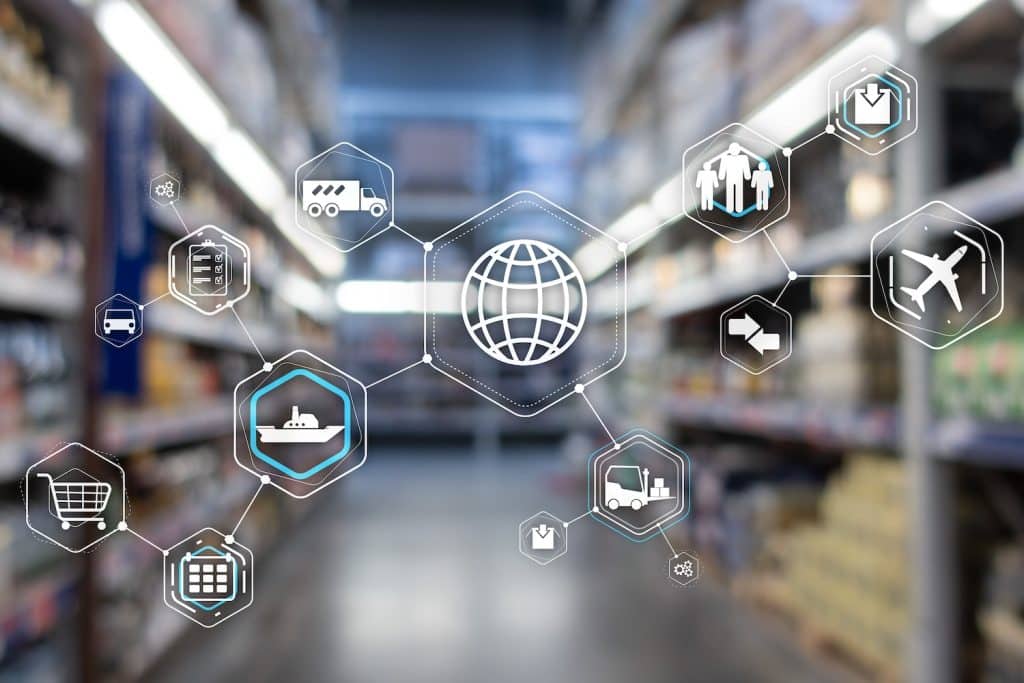
The Internet of Things, commonly abbreviated as IoT, refers to the network of physical objects or “things” embedded with sensors, software, and other technologies. IoT aims to connect and exchange data with other devices and systems over the internet.
The Internet of Things (IoT) in the context of fulfilment involves integrating advanced sensors, software, and internet connectivity into logistics and supply chain operations. This network of interconnected devices is designed to streamline the process of moving goods from manufacturers to end consumers. For example, in a warehouse, IoT devices can be embedded into storage bins, conveyor belts, and packing stations to monitor inventory levels, track the movement of packages, and optimise routes within the facility. In transportation, IoT-enabled vehicles provide real-time data on vehicle location, condition, and delivery status, enhancing the accuracy and timeliness of shipments. This technology not only increases the efficiency of fulfilment processes but also enhances accuracy and customer satisfaction by ensuring goods are delivered promptly and in good condition.
IoT has numerous benefits:
- Efficiency and Saving: IoT can optimise operations and save costs.
- Convenience: devices can adjust settings automatically and be controlled remotely.
- Improved Safety: Sensors can predict and warn about potential system failures or risky conditions.
- Data Insights: The data collected by IoT devices can lead to valuable insights into user behaviour, system performance, and more, allowing for more informed decision-making.